Week 1 - AI Capabilities, Trajectory & Power
IN THIS LESSON
The Political Economy of AI
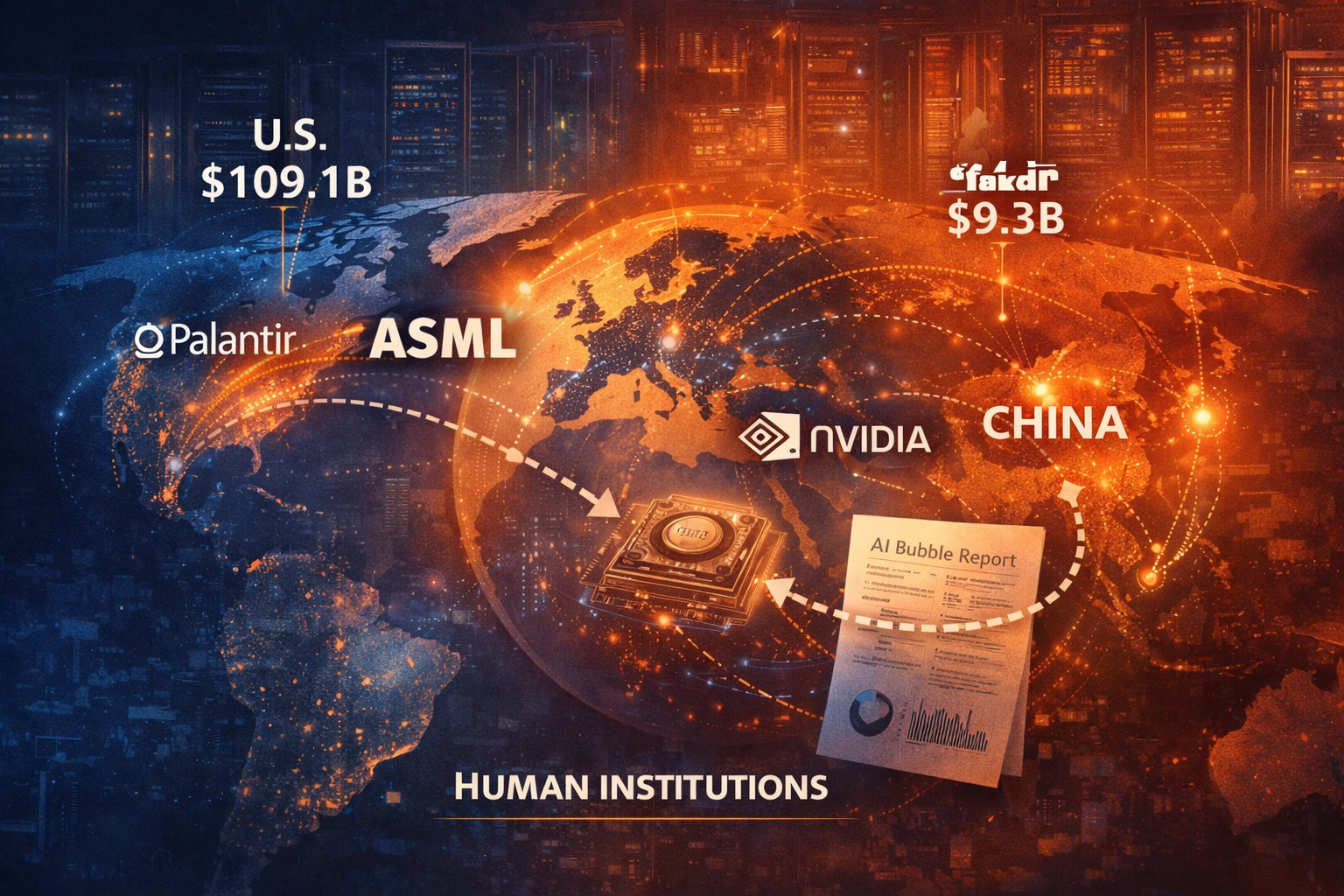
AI progress is not accidental, it is engineered, funded, and accelerated by a small number of actors. In 2024, U.S. private AI investment reached $109.1B, dwarfing China ($9.3B) and the U.K. ($4.5B). Compute supply chains concentrate power further, with NVIDIA dominating advanced GPUs and European dependencies emerging through actors like ASML and Nebius.
This week examines:
How large labs, cloud providers, and chip manufacturers shape AI development
The emerging AI circular economy in Europe
Why frontier models are increasingly framed as strategic national assets
The growing gap between public benefit narratives and private incentives
We connect these forces to the AI bubble debate and the tension between transparency and competitive secrecy, highlighting why safety concerns are often acknowledged but postponed.
Open question: If AI development is driven by power and profit, where does safety realistically fit in?